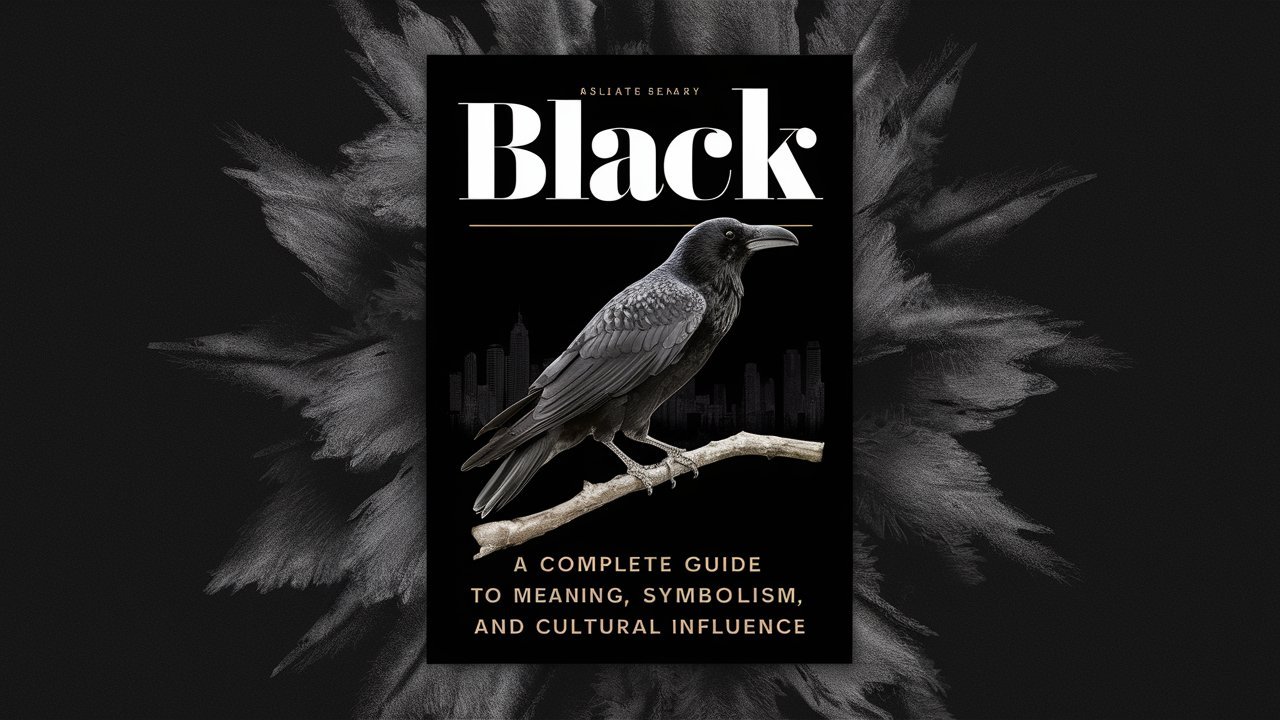
The color black is one of the most powerful and widely recognized colors in human history. From ancient civilizations to modern design, black has played an important role in art, culture, fashion, psychology, and symbolism. It is a color that carries deep meaning and evokes strong emotions, making it one of the most influential colors across societies and industries.
Unlike many other colors, black represents multiple symbolic meanings depending on context. In some cultures it symbolizes power, elegance, authority, and sophistication, while in others it may represent mystery, formality, or even mourning. Because of this versatility, black is frequently used in fashion, branding, architecture, digital design, and artistic expression.
Understanding the meaning and significance of black allows us to appreciate why this color continues to hold such a prominent place in visual culture, communication, and modern design practices.
The Meaning of the Color Black
At its most basic level, black is the darkest color and is associated with the absence of light. In physics and visual perception, black occurs when an object absorbs most visible wavelengths of light rather than reflecting them.
However, beyond its scientific explanation, the color black carries powerful symbolic meaning in human culture. Throughout history, black has been used to express strength, mystery, elegance, authority, and seriousness.
In many modern contexts, black is considered a timeless and sophisticated color, often associated with luxury products, formal clothing, and professional design aesthetics.
Symbolism of Black Across Cultures
Power and Authority
One of the most common symbolic meanings of black is power and authority. Leaders, judges, and professionals often wear black clothing because it conveys strength, seriousness, and control.
In business environments, black is frequently used in corporate branding and professional attire, emphasizing confidence and authority.
Elegance and Sophistication
In the fashion world, black is widely recognized as a color of elegance and timeless style. Iconic fashion items such as the little black dress demonstrate how the color represents refinement and simplicity.
Luxury brands frequently incorporate black into their packaging, logos, and marketing materials to communicate exclusivity and premium quality.
Mystery and Depth
Black also represents mystery and the unknown. Because it is associated with darkness, it often symbolizes hidden knowledge, secrecy, or unexplored possibilities.
In literature and film, black is commonly used to create dramatic atmosphere and intrigue, enhancing storytelling elements.
Mourning and Reflection
In many cultures, black is associated with mourning and remembrance. Funeral traditions often include black clothing as a symbol of respect and reflection.
While this association is strong in some societies, the symbolic meaning of black varies widely depending on cultural context.
The Psychology of the Color Black
Color psychology studies how different colors influence human emotions, behavior, and perception. The color black has a particularly strong psychological impact.
Authority and Confidence
People wearing black are often perceived as confident, serious, and powerful. This is one reason why black clothing is common in professional environments and formal events.
Protection and Control
Black can create a sense of protection or emotional distance. Some individuals feel more secure wearing black because it creates a strong and controlled visual presence.
Sophistication and Minimalism
In modern design trends, black represents minimalism and sophistication. Designers frequently use black to create clean, elegant aesthetics that emphasize simplicity and contrast.
Black in Fashion and Style
The influence of black in fashion cannot be overstated. Designers have long recognized the color’s ability to create slim silhouettes, timeless elegance, and versatile style combinations.
Black clothing is often chosen because it is easy to match with other colors and suitable for many occasions, from casual gatherings to formal events.
Luxury fashion brands often rely on black because it communicates premium quality, confidence, and understated elegance.
Black in Art and Design
In art and visual design, black plays a crucial role in contrast, depth, and composition. Artists use black to emphasize shapes, create shadows, and add dramatic intensity to their work.
In digital design, black backgrounds are often used to highlight bright colors, typography, and visual elements, making them appear more striking.
Graphic designers frequently use black in logos, branding, and website layouts because it delivers a clean, modern, and professional appearance.
Black in Technology and Branding
Modern technology companies often use black in product design and branding. Smartphones, laptops, and electronic devices frequently come in black versions because the color suggests modernity, durability, and sophistication.
Many technology brands use black logos or packaging because the color communicates innovation, professionalism, and reliability.
Black in Nature and Science
Black also appears throughout nature in animals, minerals, and cosmic phenomena. Certain animals have black coloration that helps them with camouflage or heat absorption.
In astronomy, the concept of black holes represents one of the most fascinating scientific phenomena, where gravity is so strong that not even light can escape.
These natural examples further illustrate the complex and powerful symbolism associated with the color black.
Why Black Remains a Timeless Color
The continued popularity of black across industries can be attributed to several key factors:
-
Versatility – Black pairs well with almost any other color.
-
Elegance – The color conveys sophistication and refinement.
-
Visual Strength – Black creates strong contrast and visual impact.
-
Cultural Recognition – The color carries well-known symbolic meanings across societies.
Because of these qualities, black remains one of the most widely used colors in fashion, design, branding, and art.
Conclusion
The color black holds a unique and powerful place in human culture, art, and psychology. Its ability to represent authority, elegance, mystery, and sophistication makes it one of the most influential colors in both historical and modern contexts.
From fashion and design to technology and cultural symbolism, black continues to shape how people communicate ideas, express style, and create visual impact. Its versatility ensures that it will remain an essential color in creative industries, branding strategies, and everyday life.
Understanding the deeper meaning of black allows us to appreciate why this color has maintained its significance across centuries of human creativity and cultural evolution.
Frequently Asked Questions (FAQ)
What does the color black symbolize?
The color black often symbolizes power, elegance, sophistication, mystery, and authority, although its meaning can vary depending on cultural context.
Why is black popular in fashion?
Black is popular because it is versatile, elegant, and easy to combine with other colors, making it suitable for many occasions.
What is the psychological meaning of black?
In color psychology, black is associated with confidence, strength, sophistication, and emotional control.
Why do brands use black in logos and branding?
Brands use black because it communicates luxury, professionalism, and modern design aesthetics.
Is black considered a color in science?
Scientifically, black is often described as the absence of visible light, as objects that appear black absorb most wavelengths of light rather than reflecting them.